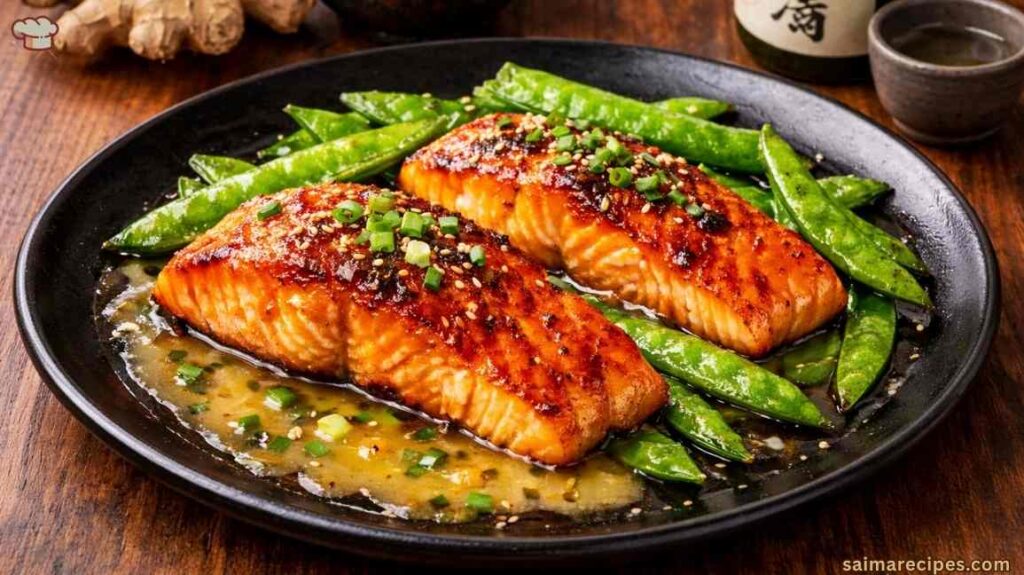
The Cheesecake Factory has a huge menu, but I always went back for the miso salmon. It has a tasty miso glaze and a smooth sake butter sauce that makes it feel fancy. After trying it once, I knew I had to make it at home.
I love how this recipe makes simple salmon seem special. The miso adds a deep, savory flavor, and the sake butter sauce makes it feel rich without being hard to cook. It’s now my favorite dish to make for guests. It smells amazing and is a pretty healthy choice, especially with fresh vegetables.
I’ve made the recipe simpler for you to cook at home. It tastes just like the original. If you love fish or want to try something new, you will like this dish. Here is how to make it.
Also Read: Polish Potato Pancakes Recipe
Why People Love This Cheesecake Factory Miso Salmon Recipe
People love this dish because it mixes great flavors without being hard to make. The miso glaze gets nice and crispy on the outside while keeping the salmon juicy on the inside. When you add the buttery sauce, it tastes like something you’d get at a fancy restaurant, but it feels like home-cooked comfort food.
It’s also a hit because it’s fast. You can whip it up on a busy Tuesday or serve it for a nice Saturday dinner. Plus, it’s easy to change if you need to—like using gluten-free soy sauce—and the crunchy snow peas make it feel fresh and healthy. It’s basically a simple way to make dinner feel like a special treat.
Ingredients You’ll Need
This serves 4 people:
- 4 salmon fillets (6 ounces each, skin-on or skinless)
- 3 tablespoons white or red miso paste
- 2 tablespoons brown sugar
- 2 tablespoons low-sodium soy sauce
- 1 tablespoon rice vinegar
- 1 teaspoon minced fresh ginger
- 1 clove garlic, minced
- 1/4 cup sake (or dry white wine as substitute)
- 4 tablespoons unsalted butter, divided
- 1 small shallot, finely chopped
- 2 cups snow peas, trimmed
- 1 cup cooked jasmine rice per serving (optional, for plating)
- Sliced green onions for garnish
These create a balanced dish with umami, sweetness, and freshness.
Tools Needed for Preparation
Gather these basics for smooth cooking:
- Mixing bowl for marinade
- Whisk
- Baking sheet lined with foil
- Small saucepan
- Tongs or spatula
- Medium pot for blanching
- Knife and cutting board
- Measuring spoons and cups
Everything is straightforward, using common kitchen items.
Step-by-Step Instructions to Make the Dish
Mix the Miso Glaze
Combine the miso paste, brown sugar, soy sauce, rice vinegar, half the ginger, and half the garlic in a bowl. Whisk until smooth, adding a splash of warm water if it’s too thick. This glaze infuses the salmon with deep, savory notes that mimic the restaurant’s signature taste.
Marinate the Salmon
Place the salmon fillets in a shallow dish and coat them evenly with half the glaze, reserving the rest for basting. Cover and refrigerate for 30 minutes to an hour to let the flavors penetrate. This step tenderizes the fish and builds that caramelized crust during cooking.
Prepare the Sake Butter Sauce
Melt 2 tablespoons of butter in a small saucepan over medium heat, then add the shallot, remaining ginger, and garlic, sautéing until softened, about 2 minutes. Pour in the sake and simmer for 5 minutes to reduce, then whisk in the remaining butter until emulsified and glossy. Set aside to keep warm, creating a rich sauce that elevates the dish.
Blanch the Snow Peas
Bring a medium pot of salted water to a boil, add the snow peas, and cook for 2 minutes until bright green and crisp-tender. Drain and immediately plunge into ice water to stop cooking, then pat dry. This preserves their vibrant color and crunch, adding a fresh contrast to the salmon.
Bake the Salmon
Preheat the oven to 375°F and line a baking sheet with foil lightly brushed with oil. Place the marinated salmon on the sheet and bake for 12-15 minutes, basting with reserved glaze halfway through, until the fish flakes easily but remains moist. For extra caramelization, broil for the last 1-2 minutes, watching closely to avoid burning.
Plate and Garnish
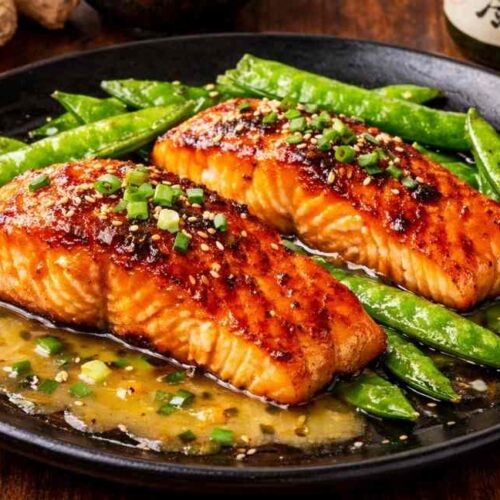
Arrange the cooked salmon over a bed of jasmine rice if using, with snow peas alongside. Drizzle generously with the sake butter sauce and sprinkle with sliced green onions. This final assembly brings all elements together for a visually appealing and flavorful plate.
Nutritional Information
Per serving (one fillet with sauce and peas), approximate values based on standard ingredients. These can vary with substitutions.
| Nutrient | Amount per Serving | % Daily Value |
|---|---|---|
| Calories | 380 | 19% |
| Total Fat | 22g | 28% |
| Saturated Fat | 8g | 40% |
| Cholesterol | 85mg | 28% |
| Sodium | 720mg | 31% |
| Total Carbohydrates | 18g | 7% |
| Dietary Fiber | 2g | 7% |
| Sugars | 10g | – |
| Protein | 28g | 56% |
This dish is protein-rich with healthy fats from salmon, but monitor sodium if sensitive.
Tips for Perfecting Your Miso Salmon
- Choose fresh, high-quality salmon for the best texture and flavor—wild-caught if possible.
- Adjust miso type: white for milder taste, red for bolder umami.
- Marinate longer, up to 4 hours, but not overnight to avoid over-salting.
- Use a thermometer; salmon is done at 145°F internally.
- For gluten-free, swap soy sauce with tamari.
- Make extra sauce—it’s great over veggies or rice.
- If sake is unavailable, dry sherry works as a substitute.
These tweaks help customize to your preferences.
Serving Suggestions
- Pair with steamed jasmine rice to soak up the sauce.
- Add sautéed bok choy or asparagus for more greens.
- Serve with a light salad dressed in sesame oil.
- Enjoy alongside miso soup for a themed meal.
- Top with sesame seeds for extra crunch.
- Complement with chilled white wine or green tea.
- Use leftovers in salads or wraps for lunch.
These options make the dish versatile.
Conclusion
The Cheesecake Factory Miso Salmon Recipe brings that beloved restaurant favorite into your home with its savory glaze and buttery sauce. Easy to prepare yet impressive, it’s a go-to for flavorful, balanced meals. Give it a whirl and savor the results.
FAQ
What type of miso paste is best?
White miso offers a milder, sweeter profile that closely matches the restaurant’s, but red miso adds deeper umami. Experiment based on your taste preference.
Can I grill the salmon instead?
Yes, grill over medium heat for 4-5 minutes per side, basting with glaze. It adds a smoky note while keeping the interior tender.
How do I store leftovers?
Refrigerate in an airtight container for up to 3 days. Reheat gently in the oven at 300°F to avoid drying out the fish.
Is this recipe gluten-free?
With tamari instead of soy sauce, yes. Check labels on miso paste, as some contain wheat.
What if I can’t find sake?
Substitute with dry white wine or sherry. It won’t be identical but still provides the needed acidity and depth.
Cheesecake Factory Miso Salmon Recipe

Equipment
- Mixing bowl for marinade
- Whisk
- Baking sheet lined with foil
- Small saucepan
- Tongs or spatula
- Medium pot for blanching
- Knife and cutting board
- Measuring Spoons and Cups
Ingredients
- 4 salmon fillets 6 ounces each, skin-on or skinless
- 3 tablespoons white or red miso paste
- 2 tablespoons brown sugar
- 2 tablespoons low-sodium soy sauce
- 1 tablespoon rice vinegar
- 1 teaspoon minced fresh ginger
- 1 clove garlic minced
- 1/4 cup sake or dry white wine as substitute
- 4 tablespoons unsalted butter divided
- 1 small shallot finely chopped
- 2 cups snow peas trimmed
- 1 cup cooked jasmine rice per serving optional, for plating
- Sliced green onions for garnish
Instructions
Mix the Miso Glaze
- Combine the miso paste, brown sugar, soy sauce, rice vinegar, half the ginger, and half the garlic in a bowl. Whisk until smooth, adding a splash of warm water if it’s too thick. This glaze infuses the salmon with deep, savory notes that mimic the restaurant’s signature taste.
Marinate the Salmon
- Place the salmon fillets in a shallow dish and coat them evenly with half the glaze, reserving the rest for basting. Cover and refrigerate for 30 minutes to an hour to let the flavors penetrate. This step tenderizes the fish and builds that caramelized crust during cooking.
Prepare the Sake Butter Sauce
- Melt 2 tablespoons of butter in a small saucepan over medium heat, then add the shallot, remaining ginger, and garlic, sautéing until softened, about 2 minutes. Pour in the sake and simmer for 5 minutes to reduce, then whisk in the remaining butter until emulsified and glossy. Set aside to keep warm, creating a rich sauce that elevates the dish.
Blanch the Snow Peas
- Bring a medium pot of salted water to a boil, add the snow peas, and cook for 2 minutes until bright green and crisp-tender. Drain and immediately plunge into ice water to stop cooking, then pat dry. This preserves their vibrant color and crunch, adding a fresh contrast to the salmon.
Bake the Salmon
- Preheat the oven to 375°F and line a baking sheet with foil lightly brushed with oil. Place the marinated salmon on the sheet and bake for 12-15 minutes, basting with reserved glaze halfway through, until the fish flakes easily but remains moist. For extra caramelization, broil for the last 1-2 minutes, watching closely to avoid burning.
Plate and Garnish
- Arrange the cooked salmon over a bed of jasmine rice if using, with snow peas alongside. Drizzle generously with the sake butter sauce and sprinkle with sliced green onions. This final assembly brings all elements together for a visually appealing and flavorful plate.