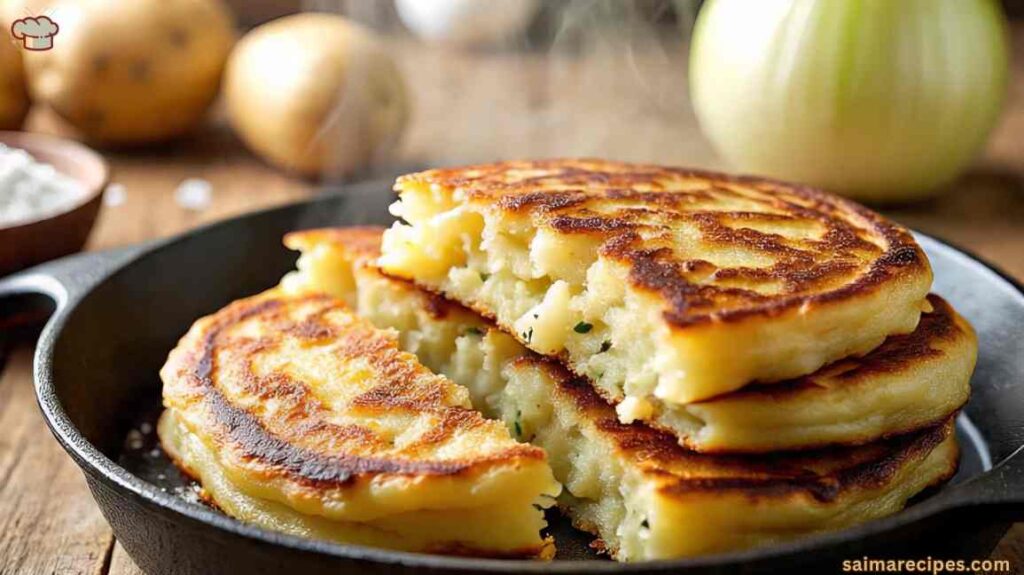
Polish potato pancakes, or placki ziemniaczane, were a big part of my childhood. I remember the delicious smell of fried potatoes and onions filling the kitchen. My grandma insisted on grating the potatoes by hand to get them perfectly crispy on the outside and soft on the inside.
This dish is great because it’s simple and comes from basic ingredients. It turns a few pantry staples into a tasty, filling meal. You can eat them for breakfast with eggs or for dinner with sour cream and applesauce.
Making them at home helps me feel connected to my family traditions. It’s an easy recipe for beginners and always a crowd-pleaser. Let me show you how to make your own batch.
Why People Love This Polish Potato Pancakes
These pancakes charm with their golden crunch and soft center, offering comfort in every bite. Rooted in Polish heritage, they’re a nostalgic treat that feels like home, especially during holidays like Christmas or Easter. The straightforward ingredients make them accessible, while the frying process creates an addictive texture contrast.
Cooks enjoy how customizable they are—add herbs or cheese for a twist, or keep them classic. They’re budget-friendly and use up extra potatoes, reducing waste. Families bond over making them, turning a simple recipe into a shared experience that warms both the kitchen and the heart.
Ingredients You’ll Need
This recipe makes about 12-15 pancakes, serving 4-6 people:
- 2 pounds russet potatoes (about 4 large), peeled
- 1 medium yellow onion
- 1 large egg
- 1/4 cup all-purpose flour
- 1 teaspoon salt
- 1/2 teaspoon black pepper
- 1/4 teaspoon baking powder (optional, for extra fluff)
- Vegetable oil for frying (about 1/2 cup)
- Optional: 1 clove garlic, minced, for added flavor
These basics yield authentic flavor with room for personal touches.
Tools Needed for Preparation
Gather these common kitchen items:
- Box grater or food processor with grating attachment
- Clean kitchen towel or cheesecloth
- Large mixing bowl
- Whisk or fork
- Large skillet or frying pan
- Spatula
- Paper towels for draining
- Measuring cups and spoons
With these, you’ll have everything ready in no time.
Step-by-Step Instructions to Make the Pancakes
Grate the Potatoes and Onion
Peel the potatoes and onion, then grate them using the fine side of a box grater or a food processor. Work quickly to prevent browning, and mix them together in a large bowl. This step releases the starches that help bind the pancakes naturally.
Squeeze Out Excess Moisture
Place the grated mixture in a clean kitchen towel or cheesecloth and twist tightly over a sink to wring out as much liquid as possible. Repeat if needed until the mixture feels dry to the touch. Removing water ensures crispier results without sogginess.
Mix the Batter
Return the drained gratings to the bowl and stir in the egg, flour, salt, pepper, baking powder if using, and minced garlic if desired. Combine until just evenly mixed, avoiding overworking to keep the texture light. The batter should hold together loosely.
Heat the Oil
Pour about 1/4 inch of vegetable oil into a large skillet and heat over medium-high until shimmering but not smoking. Test by dropping a small bit of batter in—it should sizzle immediately. Proper heat prevents greasy pancakes.
Fry the Pancakes
Scoop 2-3 tablespoons of batter per pancake into the hot oil, flattening slightly with a spatula to about 1/4 inch thick. Fry 3-4 at a time for 3-4 minutes per side until golden brown and crisp. Don’t overcrowd the pan to maintain even cooking.
Drain and Keep Warm
Transfer cooked pancakes to a paper towel-lined plate to drain excess oil. Keep them warm in a low oven (200°F) while frying the rest. This step absorbs grease for a lighter finish.
Serve Immediately
Plate the pancakes hot for the best texture and flavor. They crisp up best right from the pan, so aim to serve within minutes of frying.
Nutritional Information
Per serving (about 3 pancakes), based on 5 servings. Values are approximate and vary with oil absorption and additions.
| Nutrient | Amount per Serving | % Daily Value |
|---|---|---|
| Calories | 220 | 11% |
| Total Fat | 10g | 13% |
| Saturated Fat | 1g | 5% |
| Cholesterol | 40mg | 13% |
| Sodium | 480mg | 21% |
| Total Carbohydrates | 28g | 10% |
| Dietary Fiber | 3g | 11% |
| Sugars | 2g | – |
| Protein | 5g | 10% |
These pancakes provide potassium from potatoes and are gluten-adaptable with alternative flour.
Tips for Perfecting Your Potato Pancakes
- Grate potatoes just before mixing to minimize oxidation and browning.
- Use russet potatoes for their high starch content, which helps with binding.
- If batter seems too wet, add a tablespoon more flour gradually.
- Fry in batches to avoid dropping the oil temperature.
- For vegan version, replace egg with a flaxseed mixture (1 tbsp flax + 3 tbsp water).
- Experiment with herbs like dill or chives for a fresh twist.
- Reheat leftovers in a toaster oven to restore crispness.
These hints ensure success even on your first try.
Serving Suggestions
- Top with sour cream and chopped chives for a creamy contrast.
- Pair with applesauce for a sweet-tart balance, traditional in Polish style.
- Serve alongside smoked sausage or kielbasa for a hearty meal.
- Add to breakfast with fried eggs and bacon.
- Use as a base for appetizers with smoked salmon and dill.
- Enjoy with a simple salad for a lighter lunch option.
- Dip in yogurt sauce mixed with garlic and herbs.
These pairings highlight the pancakes’ adaptability.
Conclusion
The Polish Potato Pancakes Recipe offers a delightful way to enjoy crispy, flavorful comfort food with minimal effort. Rooted in tradition yet easy to adapt, it’s perfect for any occasion. Whip up a batch and savor the simple joys of homemade goodness.
FAQ
What makes these pancakes authentically Polish?
Placki ziemniaczane rely on grated potatoes and onion for their signature taste, fried simply without heavy batters. This method highlights fresh ingredients, a hallmark of Polish home cooking.
Can I bake them instead of frying?
Baking works for a healthier option—spread on a greased sheet at 425°F for 15-20 minutes, flipping halfway. They won’t be as crisp but still tasty.
How do I store leftovers?
Cool completely, then refrigerate in an airtight container for up to 3 days. Freeze in a single layer for longer storage, reheating in an oven to crisp up.
Are there gluten-free adaptations?
Yes, substitute all-purpose flour with a gluten-free blend or potato starch. The rest of the ingredients are naturally gluten-free.
Why do my pancakes fall apart?
Excess moisture is often the culprit—squeeze gratings thoroughly. Adding an extra egg or flour can help bind if needed.
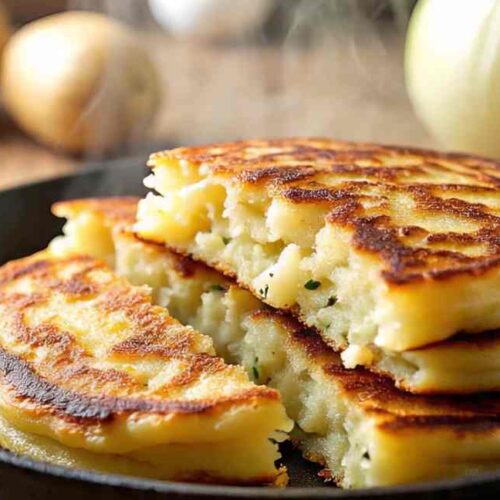
Polish Potato Pancakes Recipe

Equipment
- Box grater or food processor with grating attachment
- Clean kitchen towel or cheesecloth
- Large mixing bowl
- Whisk or Fork
- Large skillet or frying pan
- Spatula
- Paper towels for draining
- Measuring cups and spoons
Ingredients
- 2 pounds russet potatoes about 4 large, peeled
- 1 medium yellow onion
- 1 large egg
- 1/4 cup all-purpose flour
- 1 teaspoon salt
- 1/2 teaspoon black pepper
- 1/4 teaspoon baking powder optional, for extra fluff
- Vegetable oil for frying about 1/2 cup
- Optional: 1 clove garlic minced, for added flavor
Instructions
Grate the Potatoes and Onion
- Peel the potatoes and onion, then grate them using the fine side of a box grater or a food processor. Work quickly to prevent browning, and mix them together in a large bowl. This step releases the starches that help bind the pancakes naturally.
Squeeze Out Excess Moisture
- Place the grated mixture in a clean kitchen towel or cheesecloth and twist tightly over a sink to wring out as much liquid as possible. Repeat if needed until the mixture feels dry to the touch. Removing water ensures crispier results without sogginess.
Mix the Batter
- Return the drained gratings to the bowl and stir in the egg, flour, salt, pepper, baking powder if using, and minced garlic if desired. Combine until just evenly mixed, avoiding overworking to keep the texture light. The batter should hold together loosely.
Heat the Oil
- Pour about 1/4 inch of vegetable oil into a large skillet and heat over medium-high until shimmering but not smoking. Test by dropping a small bit of batter in—it should sizzle immediately. Proper heat prevents greasy pancakes.
Fry the Pancakes
- Scoop 2-3 tablespoons of batter per pancake into the hot oil, flattening slightly with a spatula to about 1/4 inch thick. Fry 3-4 at a time for 3-4 minutes per side until golden brown and crisp. Don’t overcrowd the pan to maintain even cooking.
Drain and Keep Warm
- Transfer cooked pancakes to a paper towel-lined plate to drain excess oil. Keep them warm in a low oven (200°F) while frying the rest. This step absorbs grease for a lighter finish.
Serve Immediately
- Plate the pancakes hot for the best texture and flavor. They crisp up best right from the pan, so aim to serve within minutes of frying.